ServicesSolar Panel Installation
Solar Panel Installation in Kearns
We design and install solar panels on shingle and standing-seam metal roofs, then wire them to your home and see them through inspection. The same few people handle your job from the first visit to the day you switch it on, so you always know who to ask.
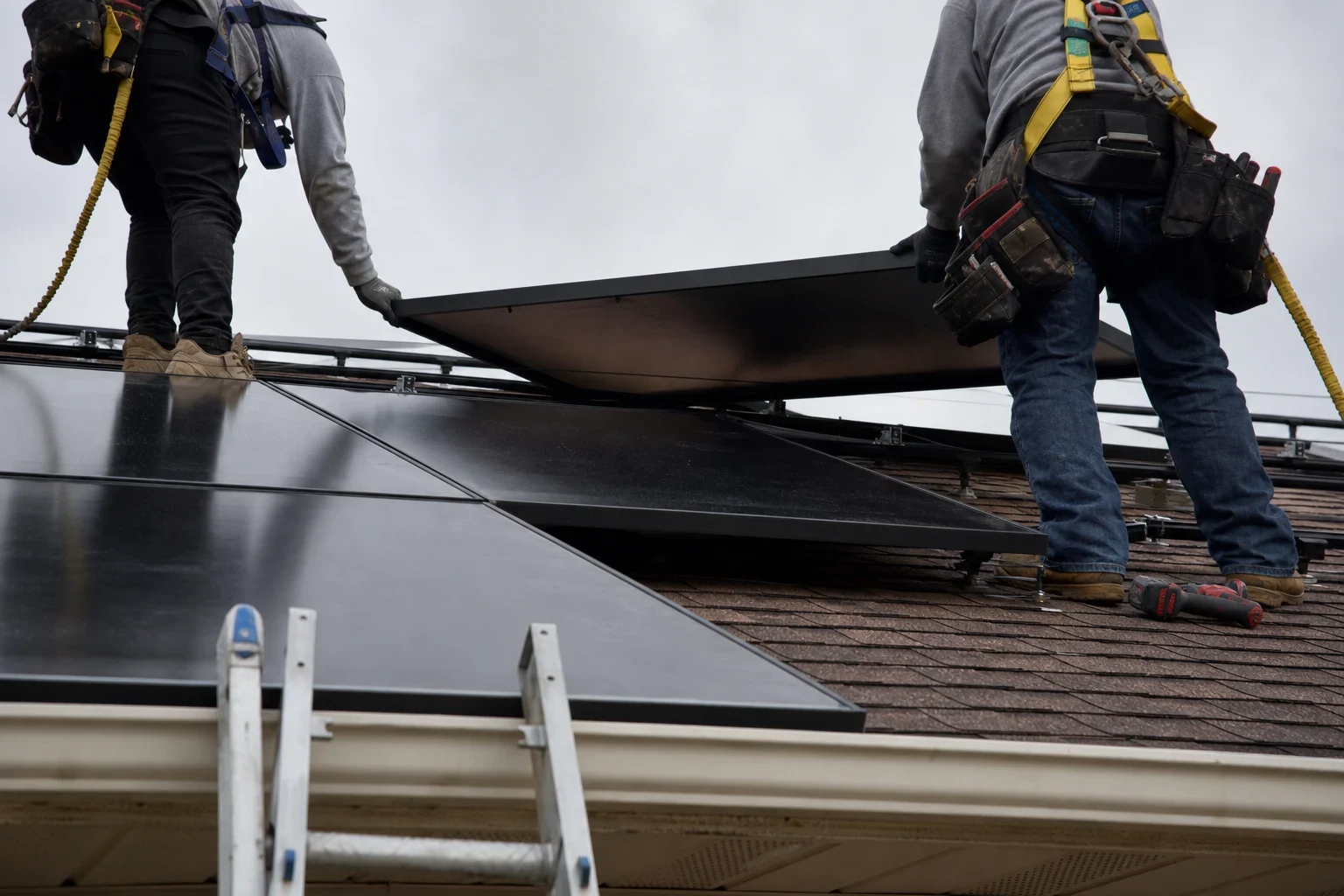
Solar on Your Roof, Built by People You Get to Know
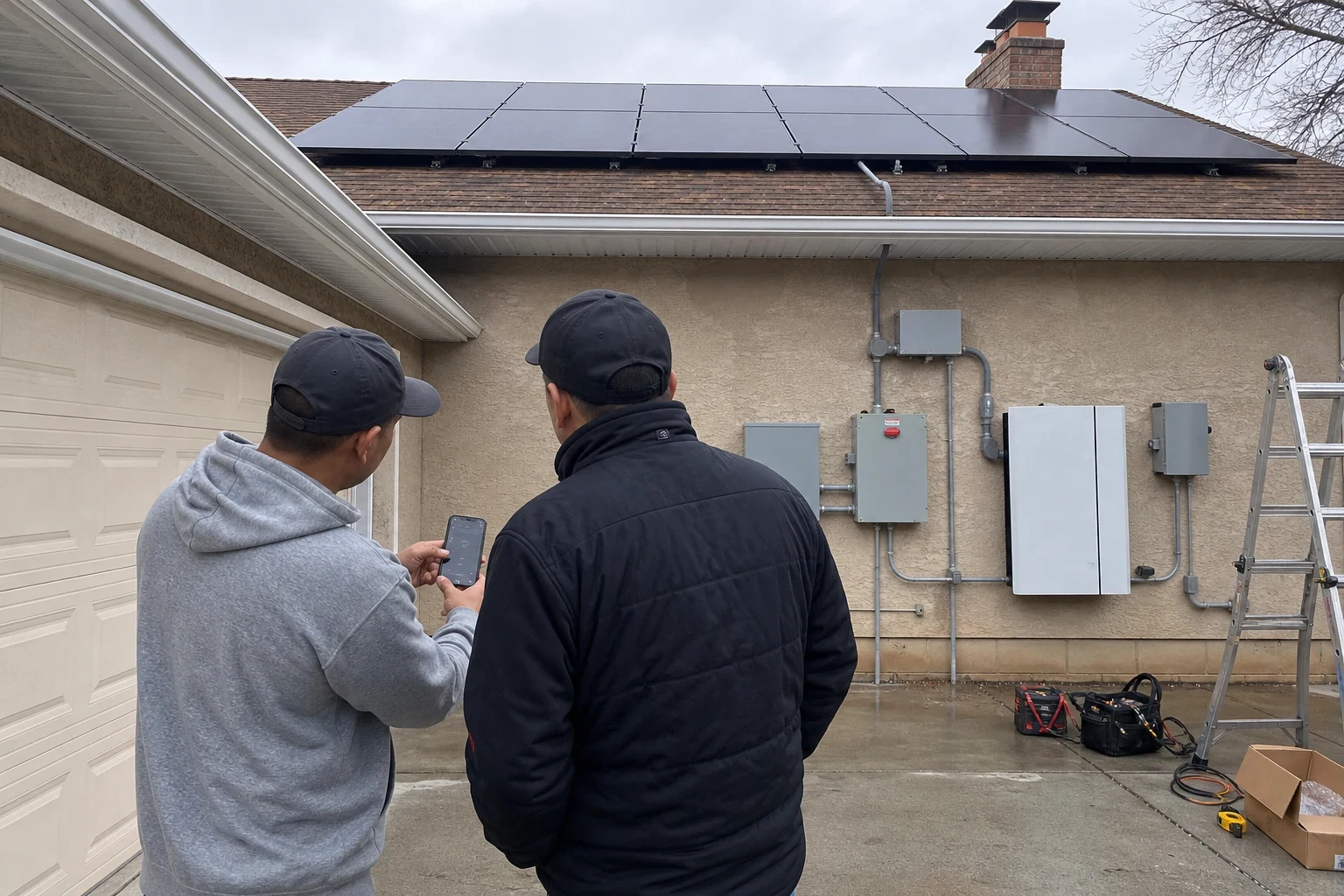
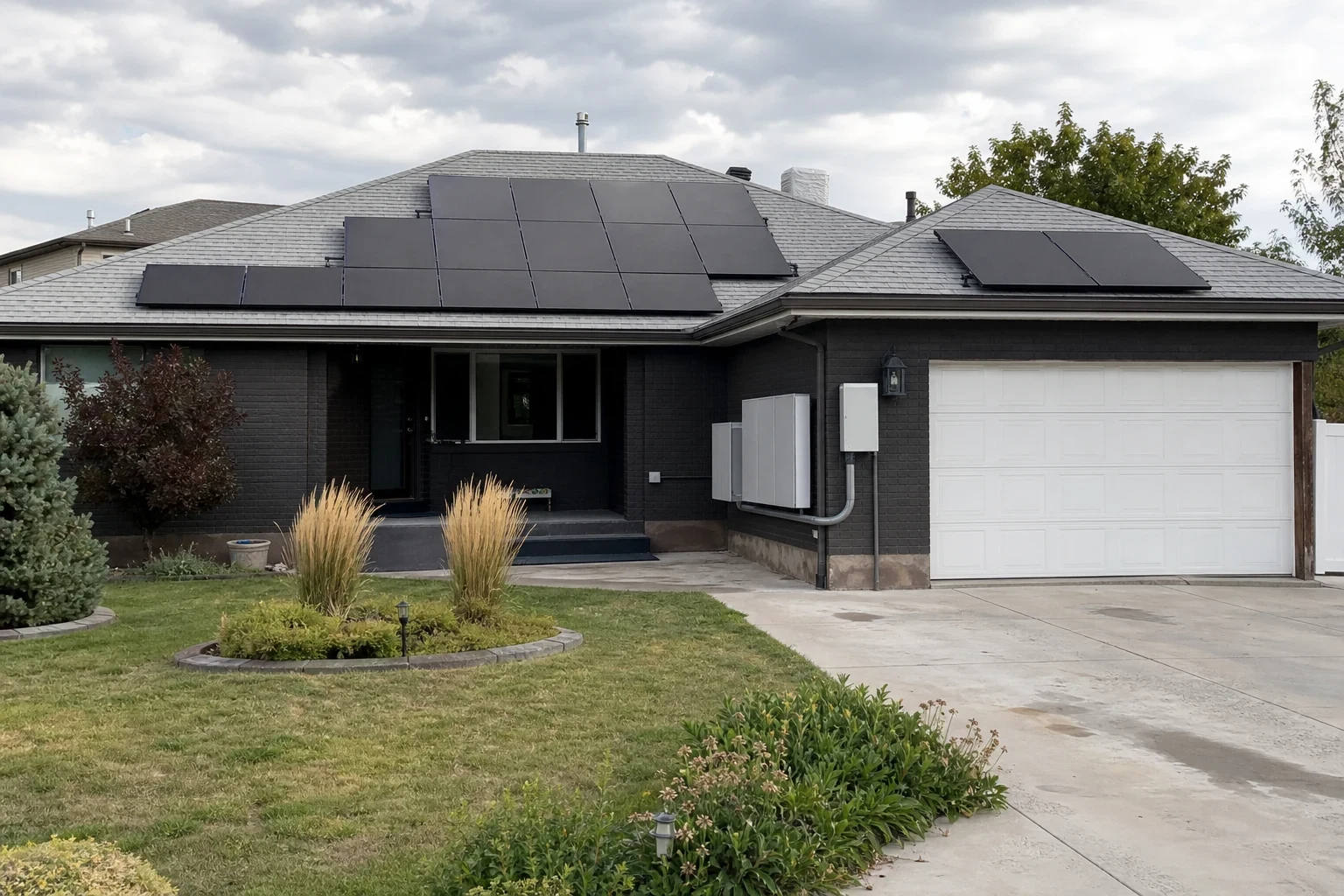
Our solar panel installation work is roof-mounted. The panels sit on low aluminum rails attached to your shingle or standing-seam metal roof, laid in tidy rows on the planes that get the most sun. Conduit carries the power down to the equipment wall at the side of your house, where the inverter ties into your electrical panel.
Before anything goes up, we check the roof itself. Every attachment is flashed and sealed so it sheds water, and on metal roofs we clamp to the seams without drilling through the panels. On a clear day after a winter storm, snow slides off the tilted glass on its own.
We keep our crew small on purpose. The person who measures your roof is part of the team that installs the array and walks you through the system at the end. Nothing gets lost between a salesperson, a designer and a subcontractor you never met.
What Your Installation Includes
- 01
Site visit and sun check
We look at where the sun falls across each roof plane through the day, note trees or chimneys that cast shade, and check the condition of your shingles or metal roofing. That trip sets up everything else.
- 02
A system sized to your bills
We review a year of your electric usage so the array covers what you actually use. You get a written estimate that lists panels, inverter, racking, roof attachments and electrical work as separate lines.
- 03
Flashed, sealed roof attachments
On shingle roofs, each mount is fastened into a rafter and covered with flashing so water runs past it. On standing-seam metal, we clamp to the seams. Then we set the rails level so the panels stay aligned for decades.
- 04
Conduit run and inverter tie-in
We run conduit neatly from the array down to the equipment wall at the side of your house. Then we mount and connect the inverter and tie the system into your panel.
- 05
Permits and utility approval
We take care of the building permit, are on site when the inspector comes out, and file the interconnection application with your utility. The paperwork stays on our desk instead of yours.
- 06
Walkthrough on switch-on day
Once approval comes in, we turn the system on with you, show you the monitoring app and explain what normal production looks like in each season.
Questions about Solar Panel Installation?
Call(801) 457-8629Signs a Roof-Mounted System Fits Your Home
Summer bills that keep climbing
If July and August run your air conditioning hard and your bill follows, solar production peaks in exactly those long, bright months.
A sunny roof in good shape
A south- or west-facing roof plane with little shade and years of life left in the shingles or metal is the main thing a roof array needs. We can tell you on the first visit whether yours works.
More electric loads on the way
Planning an electric vehicle, a heat pump or a hot tub means higher usage. Sizing solar for that now is simpler than adding panels later.
Planning to stay a while
Solar pays you back in small amounts every month. If you expect to be in your home for many years, you collect far more of those monthly savings than someone who sells soon after the build.
You want a set cost for power
Utility rates tend to move up. Producing much of your own electricity makes your monthly costs easier to predict.
How Your Project Runs
- 1
Phone call and free quote
We talk through your bills, your yard and your goals. You can choose an in-person visit or a free virtual appointment to start.
- 2
Design and written estimate
We draw the array layout, show where the conduit runs and give you an itemized estimate. If something about your roof makes solar a poor fit, we say so.
- 3
Permit and scheduling
We send the plans to the city for a permit, then call you to set your build days once it's approved. You'll know which of our people are coming.
- 4
Build days
Most roof installs take a day or two: attachments and flashing first, then racking, panels and the electrical tie-in. We haul away packaging and wire scraps and leave the yard clean each evening.
- 5
Inspection and switch-on
Once the inspector signs off and your utility gives the go-ahead, we power up the system together and show you how monitoring works.
What Moves the Price
No two roofs or electric bills are alike, so we price each system from what we see on the site visit. Every cost gets its own line on your written estimate. We also offer $0 up front, so you can start making your own power without a big payment on day one.
- System size
- More panels mean more output and more material. We match the array to the power you really use, not to the most panels your roof could fit.
- Conduit run to your equipment wall
- A longer path from the array down to your inverter and electrical panel means more conduit, wire and labor. Placing equipment close to the array can bring this cost down.
- Roof type and condition
- Steep pitches, several roof planes or worn shingles take more work. Standing-seam metal uses different attachments than shingle. We check your roof on the site visit so install day holds no surprises.
- Equipment choices
- Panel efficiency and inverter type both affect price and production. We lay out the tradeoffs in plain language and let you choose.
- Room in your electrical panel
- An older or crowded panel may not have space to take a solar connection. If yours needs work first, that upgrade is listed separately on your estimate.
Solar Panel Installation Questions
What does $0 up front actually mean?
It means you can have the system installed without paying a lump sum at the start. We walk through how the payments work on the phone and again in writing before you sign anything. Ask as many questions as you like.
How much of my roof will this take up?
That depends on how many panels you need. Before you commit, we show you a layout drawing so you can see exactly which roof planes the panels cover and how they sit with vents and chimneys.
Will the install cause roof leaks?
Every attachment on a shingle roof is fastened into a rafter and covered with flashing and sealant so water runs past it. On standing-seam metal, we clamp to the seams without drilling through the roof.
Who will actually be at my house?
A small team, and the same people from start to finish. The person you meet on the site visit is part of the crew that builds your system and turns it on with you.
What happens to the panels in winter?
The tilt helps snow slide off, and panels still produce on cold, clear days. Output is lower in the short days of December and January and climbs back as spring arrives.
Can I add a battery later?
Yes. We can plan the system so battery storage connects easily down the road, or include it from the start. Our Solar System Add-Ons page covers other upgrades too.
Find Out What Rooftop Solar Could Save You
Give us a rough idea of your roof and your monthly bills, and we'll sketch out a system that fits both. We work across Kearns and nearby towns like West Valley City, Taylorsville and West Jordan.